

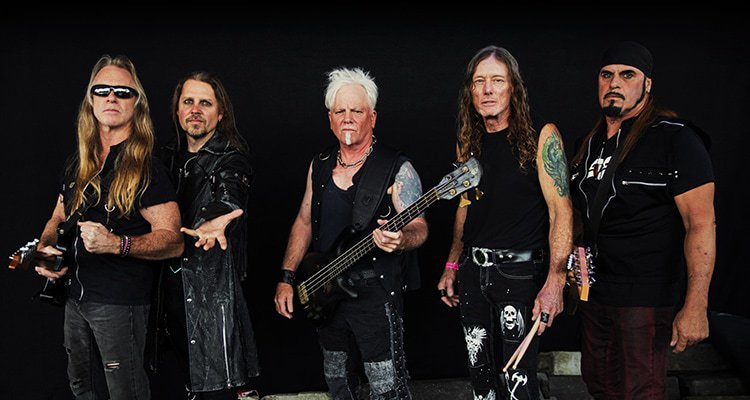
Few cult bands in American metal have a legendary status on par with Crimson Glory. From the groundbreaking impact of their self-titled debut and “Transcendence” to decades of lineup changes, long absences, and renewed momentum, the band’s history has been anything but conventional. In this conversation, guitarist Ben Jackson reflects on the classic years, the personalities that shaped the band, the legacy of Midnight, and the long road leading to “Chasing the Hydra“.
If you look back, what are you most proud of having achieved with Crimson Glory?
– Oh, you know, everything we’ve done has been a proud achievement, really. From putting out the first record and the way it felt after we released it, to being so wonderfully received by the fans, especially in Europe. So I guess the first and most important achievement was the release of that first record.
One of those questions in the music world where there isn’t necessarily a right or wrong answer, in my opinion: Do you prefer the first or the second Crimson Glory-album?
– Probably the second one. I think we matured and grew a little as writers, and it was a small step above the first one. But I don’t know, the first one will always be special to me because we were young when we put that out, and it’s really a unique and cool record.
Which is your favorite song to perform live from those records?
– Probably “Azrael.” It’s a song that we’ve always played live, and no matter where we perform, even if other songs come in and out of the set, that’s one that always seems to be there. It’s a fan favorite, it goes over very well live, and it’s always been a fun song to play.
I’ve never heard a band that managed to copy Crimson Glory. There are lots of bands that are obviously influenced by Crimson Glory, but there was some kind of magic around the band in those early days. Was it the chemistry, the songwriting, or something else? What made those releases so special in your opinion?
– I think it was a combination of everything. The chemistry we had as musicians together, the bond we built and shared, because we all really liked metal music and had a passion for creating something new with our band, something fresh. I don’t know, it was just all of us being together. The five of us fed off each other’s energy. We pushed each other harder and harder to do more, be better, and come up with something really great. So I think the magic was in the people and who we had there working together in that unit.
Did you have similar musical inspirations? Did you listen to the same bands, or were your tastes different? What were your favorite bands at that time?
– Well, I grew up listening to Bad Company, Led Zeppelin, The Beatles, and all kinds of things when I was young. I’m influenced by a very wide spectrum of music. By the time I got a little older, in my early twenties and working with the guys in Crimson Glory, we were all into similar bands. We liked Iron Maiden’s first three albums. We liked Black Sabbath, especially “Heaven and Hell” with Dio. We loved Dio’s first album, “Holy Diver” too. We were very influenced by Michael Schenker Group, especially the “Assault Attack” album.We all really liked the same things. The first Ozzy album, for example, we fell in love with that and with the guitar work of Randy Rhoads. Jon Drenning was hugely into Randy Rhoads back then, and I was hugely into guys like Michael Schenker. The influences were similar, but there were differences too. We all brought in the things we liked and meshed them together as we tried to create our own style of writing and our own style of music.
Do you still follow someone like Michael Schenker? He was just here in Norway a couple of days ago. Do you still listen to his new records, or do you prefer the older material?
– I prefer the older stuff. I’m sure his new material is great, I just haven’t really taken the time to delve into it. I’d like to check it out and see what it’s like, for sure. But I grew up on albums like “Assault Attack” and songs like “Armed and Ready.” I love that material. It still holds a big place in my heart because it’s music I loved growing up with.
Is he your favorite guitarist?
– Oh, he’s one of my favorite guitarists, for sure. Another would be Pat Travers. I really liked him a lot growing up. As a teenager, I had all his albums, like “Heat in the Street” and “Putting It Straight”. On “Putting It Straight”, he had Nicko McBrain on drums before Iron Maiden, and on “Heat in the Street” he had Tommy Aldridge in the band. Pat Travers was just awesome to me growing up, so he’s one of my favorites. And, of course, Eddie Van Halen is one of my favorites as well.Yeah, I have many, many favorite guitar players. There’s not just one. There are many.
You left Crimson Glory after “Transcendence”. Was that your own decision, or were you forced to leave?
– It was something I was forced to do. It was not my decision. Jon made the decision that he wanted to be the only guitar player on the third album, and he wanted to take the band in a more bluesy direction, more of a Zeppelin-inspired hard rock vibe. I didn’t really want to see the band change from a two-guitar attack to a one-guitar blues-rock sound. I wanted to keep the band as it was, but it was something Jon wanted to experiment with. He convinced Jeff and Midnight that it was the direction the band should take, and that’s just the way things happened.
Was that hard to accept?
Of course. I was a young guy, and we had just made a pretty big splash with our first two albums. I wanted to keep it going and work on a third album, but John had other ideas.It didn’t seem like a good idea to me, but I couldn’t change it. I just had to accept it. Dana and I both moved on and formed another band called Parish, which actually sounded a lot more like Crimson Glory than their third album did.
That was, in fact, my next question for you. You had the band Parish in the mid-’90s and also the Ben Jackson Band. I guess you’ve been playing guitar all these years. Has it been positive or negative for your career after Crimson Glory that you were the guitarist in that band?
– It was positive, for sure. I think when I put out my own music, people paid a little more attention to it because I was a former member of Crimson Glory. The Parish album came out and was received very well. It was released on a label in Japan and another in Germany, and it got really good reviews. But the singer wanted to leave the band right after the record came out and go back to school. So the band kind of broke up almost immediately after the album was released. There wasn’t really anything I could do about it. It was just one of those situations where the band was destined to be a one-album project, never to be seen again. It was a good experience, though. Making the Parish album was a very good experience for both Dana and me. We enjoyed it, and it’s a great album. Some of the albums I did after Parish, the Ben Jackson Group records, Avenging Benji, and my solo work, were opportunities for me to experiment with not only being a guitar player but also being the singer in the band. That was kind of experimental for me, and I really enjoyed doing it. I missed Crimson Glory during the years I was away from the band, though. I missed working with the guys. So when the opportunity came around to work with Crimson Glory again, I got right back involved.
Because there has been talk of a new album from time to time, and people have wondered why it hasn’t happened until now. I’ve seen you mention Jon Drenning as the one holding things back. It’s also easy to single him out because he’s no longer part of the band. So was he really holding Crimson Glory back?
– I’ve mentioned it in interviews before, and if you look at all those years when the band wasn’t active, it really was Jon. He would pull away and pull the plug on things because he had personal things going on in his life and simply didn’t want to do it.Then maybe ten years later, he’d call us and say, “Hey, I’m really excited about doing the band again.” Whether it was with Wade or with Todd, we’d get the band back together, work for a couple of years, maybe two years at the most, and then he’d pull the plug again and disappear for another ten years. It’s not my goal to shame or blame Jon. That’s just the way things happened over the years. I’m simply telling the truth as I experienced it. I’m not trying to single him out because he’s not here to defend himself. It’s just the honest truth.The band had many opportunities to get moving and stay active for a long time, but Jon was always the one who would eventually pull the plug. After a couple of years of hard work, he’d say, “I’m not going to do it anymore, guys.” Then ten years would pass, and we’d hear from him again. It became a pattern in the band’s history. Eventually, Jeff and I came to feel that Jon had become more of a liability than an asset. We wanted to move forward knowing that nobody could suddenly pull the rug out from under us while we were trying to build something.
But he was a very important member of the band in the early days.
– And we’ll always give him credit for that. He was a very important part of the band’s history, a major contributor to the music and the sound. We would never want to take that away from Jon. Bands evolve over time. Deep Purple, for example, has carried on for years with different lineups. That’s just part of life. If this band was meant to move forward with Jon Drenning, I guess he’d still be with us. But it’s just not meant to be. He doesn’t want to be there, and that’s his choice.
I guess there was some pressure from the record company and maybe from the fans as well, because people often want most of the original lineup together. So I imagine it wasn’t an easy situation.
– You know, it really wasn’t that difficult for us. Everybody we spoke to, whether it was promoters or record labels, seemed very happy once they knew that three founding core members were still in the band: Dana, Jeff, and me. People were excited to see what the band could do going forward. And we’re all capable writers as well. Jon isn’t the only songwriter in Crimson Glory. He’s a capable writer, absolutely, but Jeff was extremely important in the writing of all the classic Crimson Glory albums, and he’s a huge part of the writing on the new album too.
Has Jon been involved at all since around 2012 or 2013? Because if not, it’s still taken more than a decade to get this album out.
– No. We haven’t seen Jon or spoken to him since 2012, when he left.He had absolutely nothing to do with the creation of the new music. Everything on this album has been written during the last three years. The musical compositions came from Jeff, me, Travis, Dana, Mark, our new guitar player, and the rest of the current lineup. These are all fresh ideas created by us. There were no contributions from Jon.
We’ll come to the new album in a moment. My last question about the band’s history concerns ”Astronomica”. I remember getting that album for review, and it’s scary to think it’s more than 25 years old now. How do you view that album today, and what happened to the band after its release?
– The album was really strong. Jon and Jeff decided they wanted to bring the band back, and Jon was excited about doing Crimson Glory again. They invited me back so the band could return to being a two-guitar attack. By the time they invited me, the album was actually pretty much already recorded. They wanted me back primarily for the touring. So I joined John, Jeff, Wade, and the rest of the “Astronomica” lineup, and we toured seven countries across Europe in 2000. The fans were really excited to see the band, and the shows were very strong. At the end of the tour, Jon said to me, “Ben, I don’t know if Wade is the right singer for the band.” I said, “Oh, okay.” Then he shut the band down again for another ten years. That’s basically what happened.
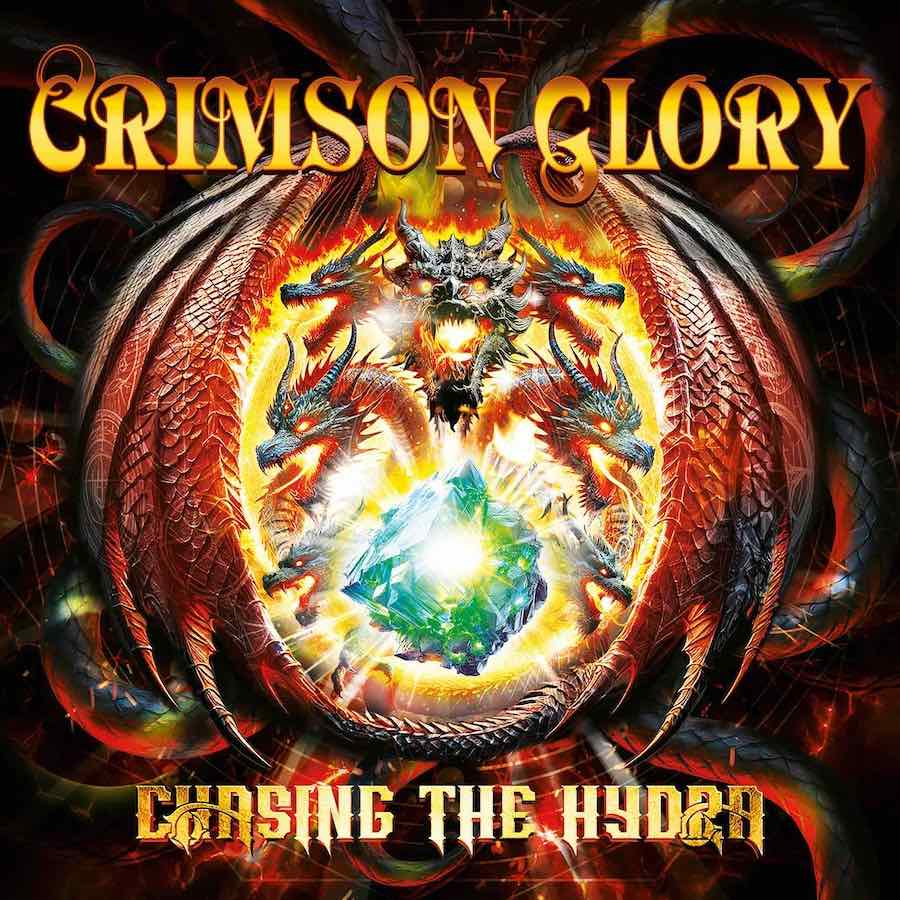
Let’s speak a little about the new album. I understand that the material is new and has mostly been written during the last few years, but there are a couple of songs that you’ve had around for some time already.
– Well, three years ago, we wrote two songs as experiments to see what this band could sound like with a new singer. Those songs were “Triskaideka” and “Indelible Ashes.” About three years ago, we wrote and recorded those songs, and then we released “Triskaideka” as a single. At the same time, we told the world that the band was back and that we had a new singer.We felt that if we were going to announce, “We’re back and we have a new singer,” we should also give people a song instead of just an announcement. So we wrote and recorded a track before we even made the announcement.After that, we wrote the rest of the album. Nothing on the record is more than three years old. The first songs created for the album were “Triskaideka” and “Indelible Ashes,” and everything else followed after that. Over the last three years, the record was written, recorded, and completed.
Have you written separately, or have you sat down together and composed as a group?
– Mostly separately. Jeff would demo ideas and riffs and send them to me and Travis. I also came up with riffs and demoed ideas that I sent to Jeff and Dana. A couple of the songs that I contributed writing to were “Triskaideka” and “Broken Together.” A lot of the other songs were primarily created musically by Jeff.
When you work that way, how do you make sure the songs fit together and become a cohesive album?
– When we share demo ideas with each other and somebody says, “Hey, I like that demo,” then we do get together and work on it as a group. That’s when it becomes more of a band creation. We’ll bring Dana in and let him develop the drum parts. Then we all get together, play the material, and see how it feels. That’s really the process.
Is it difficult when the other members give feedback on songs you’ve written? Do you prefer to keep them as you originally intended?
– Not really. It’s pretty natural. We’ve known each other for a long time, and we’re the kind of band where, if we give each other ideas and somebody doesn’t like one of them, we’ll be honest and say, “I don’t know if I like that one. But I do like this idea. Let’s work on that instead.” As I mentioned, I co-wrote two songs on the record, but I probably submitted several ideas that nobody felt strongly about. Some ideas they like, and some they don’t. That’s just part of the process. The same goes the other way. If Jeff sends Dana and me some riffs and we’re not really feeling them, we’ll tell him honestly: “We’re not really feeling this one. What else do you have?” Everything is very cordial and gentlemanly. Nobody takes it personally.
The fact that it’s been such a long time since the previous album, does that make it easier or harder to find the musical direction and approach to songwriting?
– It doesn’t really make it harder.We’re the same guys who helped create those early albums. We were there. We helped make them. Since then, we’ve grown and matured as writers and musicians.If anything, we’re better at it now than when we were young. Ideas come more freely. We don’t write nearly as much material that ends up being discarded. Most of what we write now is stuff we actually want to keep.We’re more mature as players and as visionaries. So even though a lot of time has passed, it wasn’t difficult. We just had to ask ourselves, “As a band putting out a new Crimson Glory album, what do we want to sound like?”The answer was obvious. We wanted to sound like the first two albums, and probably more like “Transcendence” than anything else, because that’s the album people seem to connect with the most.We said, “Let’s write songs that capture that feeling.”Not as a carbon copy and not by repeating history, but by capturing the same essence and the same flavor.
And “Transcendence” is, at least to me, a very timeless album. I love the debut as well, but “Transcendence” feels even more timeless.
– Yeah, I think maybe the production on the first album sounds a little more dated. “Transcendence” has a more timeless production and a more timeless overall presentation. It’s difficult when a band releases an album like “Transcendence” because people hold it in such high regard. From that point on, everything you do gets measured against it. People always say, “Well, it’s not “Transcendence”.”But that’s okay. We’re here to make new music and create more albums.
What do you believe is the strongest feature of the album “Chasing the Hydra”?
– I think its greatest strength is the overall essence of Crimson Glory. It sounds like Crimson Glory. It has that old-school “Transcendence” vibe. You hear it in the music, in the way Travis sings, and in the way the guitars interact with those twin-harmony parts.At the same time, it’s a very unique, progressive, and modern Crimson Glory metal album.
Maybe that’s because of the progressive element you’ve mentioned, but I think the album takes a little time to get into. It’s not as instant as the first two albums.
– Yeah, I agree.Maybe that’s because it’s a little more progressive than the earlier records. There are more changes going on, more twists and turns, and more unexpected moments in the songs. I agree completely. It’s a great listen and a great piece of work, but it may not be the kind of album that you fall in love with immediately. It takes a handful of listens before everything starts to make sense and really grow on you.The melodies start working their way into your head, and all the little details become more apparent. You start noticing things that you missed before and thinking, “Oh, wow, okay.” It is a complex record. You really do have to spend some time with it before it fully reveals itself.
The title track was chosen as the first single, and there’s an obvious reference to “Red Sharks” in there as well. What was the idea behind that?
– Well, the first single was actually “Triskaideka.” We released that with a lyric video when we announced that Crimson Glory was back with Travis, so that was technically the first single from the album.The second single was the title track, “Chasing the Hydra.”And yes, there’s a riff near the beginning that Jeff created that’s clearly a little tribute to the feel of “Red Sharks.” That was intentional.We didn’t put that riff in there because we were out of ideas and needed to recycle something old. We put it there as a little nod to the band’s history and as a way of saying, “Hey, this is Crimson Glory.” It was completely deliberate.It’s also just a really cool, heavy song. A great power metal track that kicks ass from beginning to end. We really love that song.
The fact that you recorded in different locations instead of having the whole band together in one studio, was that mainly a budget consideration or something else?
– It was partly about working within a budget, but it was also about people’s schedules and where everyone lives.More than that, it’s just the modern way of recording. There are so many musicians now who have home studios capable of producing recordings with a quality that used to require a professional studio. Recording parts in different locations is very common these days. It’s not just our band. Lots of bands record material in different places around the world and then send everything to one location for mixing. That’s basically what we did.We recorded the music here in Sarasota. Travis recorded his vocals at home in Dallas, Texas. Everything was then sent to Morrisound, where Jim Morris mixed the album. Jeff and I were there during the mixing sessions to make sure everything had the proper Crimson Glory stamp on it. And Jim knows this band inside and out. He was genuinely excited when he heard the new music. The first time we sent him tracks, he was all smiles. He’d hear little sections of songs and just grin. He kept saying, “This is totally Crimson Glory.” He told us that we’d really outdone ourselves. He felt it sounded like Crimson Glory while also being more progressive and more high-octane than before.
We’re nearing the end, Ben, but you’ve had quite a few singers in the band: Midnight, Wade Black, Todd La Torre, and now Travis. Do they have something in common, and what do you think separates them?
– No, I don’t think any of them really have anything in common with each other. They’re all completely unique individuals. There will only ever be one Midnight. He was a real legend, a true vocal genius. No one will ever replace him in the sense that there’s only one Midnight. Wade Black came in and did “Astronomica”, and he did a fantastic job. He approached it in his own way. He wasn’t trying to be Midnight; he was simply being Wade Black, and that record turned out great. He did a really cool job. Todd La Torre came into the band with his own style as well. He could sing the old Midnight material and probably sound more like Midnight than Wade could, because Todd has a unique ability to sound like other singers when he wants to. But he absolutely has his own voice too. If Todd wants to sound somewhat like Midnight, he can do that. If he wants to sound like Geoff Tate, he can do that. If he wants to sound like Neil Diamond, he can probably do that too. He’s one of those rare singers. He has his own great voice, but he can imitate other singers extremely well when he chooses to. Then Travis came in, and he’s completely different from Todd. He has his own voice and his own style of singing. At the same time, I think he probably captures more of the Midnight essence than any of the other singers we’ve had. Travis comes a little closer to that Midnight vibe while still remaining himself.
Was that important when you were looking for a new singer?
– In a way, yes, but we weren’t looking for someone who sounded exactly like Midnight. We actually had one guy audition who sounded so much like Midnight that it was scary. We thought, “If we make an album with this guy, people are just going to criticize us because we’re not doing anything new. It’ll seem like we just found a Midnight clone.” There were a few other reasons why that situation didn’t work out, but when we found Travis, we liked the balance much better. He can occasionally remind you of Midnight, but he’s not overdoing it. He has his own voice, and that was important to us.
I remember interviewing Midnight when he released his solo album. I spoke to him for about an hour, and then he called me back twenty minutes later because he was worried there might have been something I hadn’t had time to ask him. I think that says a lot about him. What are your fondest memories of Midnight?
– I have a lot of good memories of Midnight, and most of them have more to do with our friendship than with working together in the band. We were very good friends. We knew each other from our school days, and we spent a lot of time together. We shared a lot of good experiences. He was just a really down-to-earth guy with a lot of personality and charisma. So when I think about Midnight, I remember him as a friend and as the unique person he was. When I first met him, he was probably only sixteen or seventeen years old, and he was already going by the name Midnight. That was years before he joined our band. He eventually joined about five years later.Back then, he was the guy who would play at parties, high school pool parties, and gatherings with nothing but an acoustic guitar. He’d sit there singing Led Zeppelin songs, Pink Floyd songs, and other material completely on his own. He was mesmerizing to watch. Here’s this young teenager calling himself Midnight, playing acoustic guitar on the beach and singing songs for people. Then one day, when we needed a singer, we thought, “Maybe we should check out that guy Midnight.”We knew him as the guy who played acoustic songs on the beach, but we also knew he had an incredible voice. So we brought him in.
So where did the name Midnight come from?
– He lived in California for a while and met a girl there who gave him the name Midnight. I’ve heard him tell this story himself in interviews. According to Midnight, a couple of days after she gave him the nickname, she drove her car off a cliff and was killed. After that, he decided to keep the name. That’s the story as I heard him tell it many times over the years.
You’re doing a lot of festivals in Europe this summer. Was this album made with that in mind, to give the band a reason to get back out there and tour Europe again?
– Not really. When Travis joined a few years ago, we were already playing festivals throughout Europe. Even without a new album, we were drawing good crowds and getting a great response from the fans.It’s been very encouraging to see how much enthusiasm there still is for the band. Honestly, Crimson Glory could probably have continued touring this summer without a new album and done just fine. But Jeff, Dana, and I all felt strongly that we didn’t want to become a nostalgia act that simply played the old material forever. If we’re going to continue moving forward as a band and keep touring, then we need to create new music and release new albums. We want to show people that Crimson Glory is still a creative band and not just a legacy act.
There are several other American bands you’ll be sharing festival bills with this summer, including Savatage, Metal Church, and Armored Saint. Will you get a chance to spend time with those bands, and do you have any particular connection to them?
– Well, Savatage is from Florida too, so I’ve had opportunities to meet those guys on several occasions over the years. I’ve met Jon Oliva, Zak Stevens, Doc Wacholz, Chris Caffery, Johnny Lee Middleton, and a number of the other members. I’ve hung out with them here and there through the years. Being from the same state, we’ve always had that in common. We’re both Florida metal bands that came up around roughly the same time, and we’ve followed similar paths in many ways. I have a tremendous amount of respect for Savatage.I don’t really know the guys in Armored Saint personally because they’re not from Florida, so I haven’t had many opportunities to cross paths with them. But I like the band, and I look forward to seeing them this summer. A lot of the festivals we’re playing feature many of the same artists. Savatage is playing Wacken, and so are we. They’re also playing Alcatraz Festival in Belgium, where we’ll be appearing as well. And they’re playing Keep It True Legions in Germany, where we’ll also be performing. Metal Church is appearing at a number of the same festivals too. So it’s going to be a very interesting summer. It’ll be great to share bills with these bands, catch up with old friends, and see some familiar faces again.

